

Dr. Godwin Ayetor, Chair of the Electric Vehicles and Sustainable Mobility Research Group at the Brew-Hammond Energy Centre, has called on emergency responders to adopt new strategies to effectively manage incidents involving electric vehicles (EVs), noting that EV-related emergencies present unique risks compared with conventional vehicle fires.
Dr. Ayetor made the remarks on the second day of the Electrifying Response training programme organised by the Brew-Hammond Energy Centre in collaboration with the Climate Compatible Growth Ghana Network.
He explained that although EV fires are relatively rare, they can be significantly more complex when they occur.
“The chances of an EV fire are lower than that of a conventional vehicle, but when it happens, it can be dangerous and requires a different emergency response approach,” he said.
According to him, EV-related incidents pose risks such as electrocution, chemical exposure, vapour clouds and secondary ignition, making them particularly challenging for firefighters.
“Even after a fire has been extinguished, there is a possibility of re-ignition hours or even days later,” he explained. “There was a case where a battery reignited 33 days after the initial incident.”
Dr. Ayetor noted that many EV fires originate from thermal runaway, a chain reaction within lithium-ion battery cells that generates heat and gases capable of triggering fires or explosions.
“Once thermal runaway begins, there is very little you can do immediately to stop the process,” he said.
He also warned that vapours released from failing batteries can create dangerous conditions for responders.
“The moment firefighters see vapour coming out of the battery, the best response is to secure the perimeter because the next stage could be ignition or an explosion.”
Data presented during the training showed that EV fires can occur while vehicles are parked, being driven or connected to charging infrastructure, with about a third occurring during charging.
However, Dr. Ayetor clarified that charging itself is not necessarily the cause.
“Charging does not necessarily cause the fire, but when a battery already has issues, adding energy through charging can worsen thermal runaway.”
He added that saltwater exposure, such as during flooding, can also trigger battery failures due to chemical reactions within lithium-ion cells.
Another facilitator, Ing. Godwin Rajiv Deyegbe, Head of Field and Technical Support at Toyota Tsusho Manufacturing Ghana, spoke on electrical safety and charging infrastructure management. He explained how electric currents affect the human body and why safety precautions are critical when working with EV systems.
He noted that even small electric currents can have significant physiological effects.
“Current as little as 0.1 amps passing through the heart can be fatal,” he explained. “This is why personal protective equipment is critical when working with electric vehicles.”
Ing. Deyegbe emphasised that EV systems are designed with multiple safeguards, making electrocution unlikely under normal circumstances.
“Receiving an electric shock from a hybrid or electric vehicle is highly unlikely unless the battery system is damaged or someone tampers with components without proper precautions,” he said.
He also highlighted distinctive colour coding in EV systems, noting that orange cables typically indicate high-voltage components that should only be handled by trained personnel.
Ing. Deyegbe stressed the importance of personal protective equipment, including high-voltage gloves, insulated tools, safety goggles and protective footwear when servicing electric vehicles.
He urged workshops to designate specific service areas for EVs and ensure technicians follow strict safety procedures.
“Do not get complacent. Even if you have done it many times, always follow the standard operating procedures and verify that there is zero voltage before working on the system,” he advised.
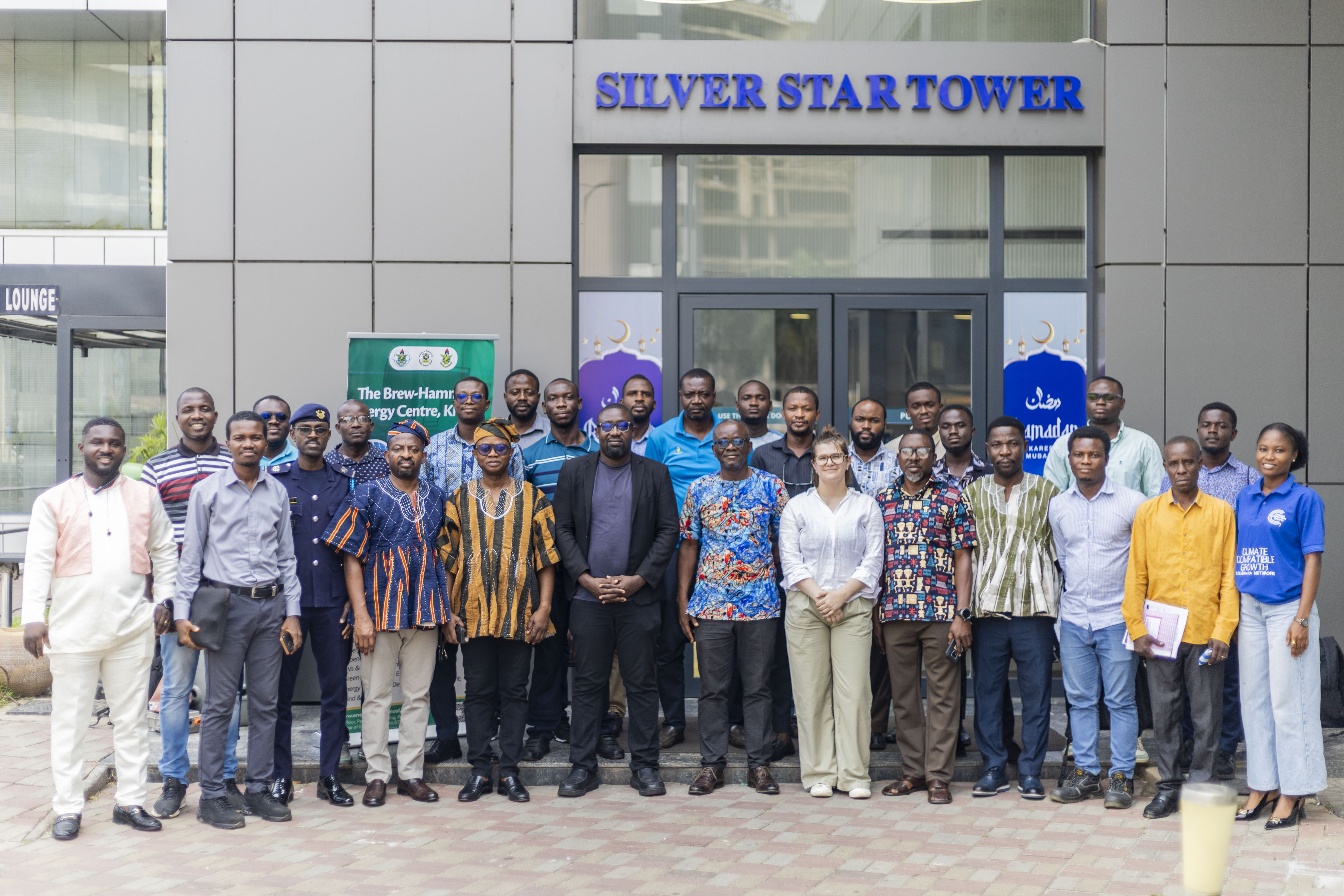
The training ended with a discussion featuring electric vehicle drivers, mechanics, charging station installers and operators, who shared practical experiences from Ghana’s emerging EV ecosystem.
By Abena Serwaa Gyamfi


